
01
Residues from non-ferrous metal production, including zinc
Residues from non-ferrous metal production form a concentrated deposit, stockpiled today rather than recovered.
Circular economy · Urban mining · Algeria
Urban Mine DZ applies the urban mining concept in Algeria: turning household and industrial waste into raw materials instead of burying it. Collection, treatment, recovery, remediation and technology transfer, from Rouissat in the wilaya of Ouargla and from our test site in Laghouat.
The concept
First published in 2004 by Dr Farouk Tedjar, the urban mining concept has since been registered as an international trademark. It is now part of the recycling and sustainability landscape.
One of the pillars of the circular economy is recycling: it turns waste into valuable materials that substitute for natural resources. The growing scarcity of strategic metals and the climate stakes make that substitution increasingly decisive.
The concept came out of an observation made during a study carried out for the European Commission under the 5th Framework Programme (1999-2002): the lithium content of spent batteries exceeds the concentration found in ore extracted from natural mines. In other words, the richest deposit is no longer always beneath our feet — it is in what we throw away.
Among the resources critical to a country, metals rank third, just after water and energy. Those who exploit their urban mine gain access to resources their subsoil does not hold: Belgium is a significant exporter of cobalt and palladium without owning a single mine on its territory.
Source: F. Tedjar, Modern Concept in Materials, May 2020.
Identified deposits
Our discussions with several segments of national industry, together with our observation of household waste, have allowed us to identify significant deposits. Exploiting them would solve an environmental problem while injecting resources into the country’s economy. This list is not exhaustive.
Residues from non-ferrous metal production form a concentrated deposit, stockpiled today rather than recovered.
From chemical and petrochemical units, they concentrate rare metals whose recovery would avoid imports paid in foreign currency.
Electric arc furnace dust contains recoverable metals: it has been the subject of dedicated work by our founder.
Solid residues from incineration: they can be treated to extract their metal fractions and a reusable inert material.
From households as well as from specialised industry, screens included: the most emblematic deposit of the urban mine.
On this deposit, we are in a position to offer a national solution in due course, based on a patented process.
Technologies
Asbestos treatment is the first process we are taking to national scale. It rests on research carried out in France by our founder and secured by a granted patent.
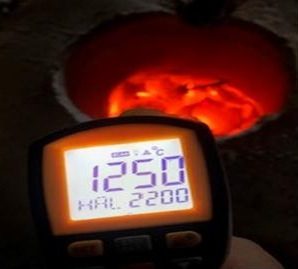
The technology relies on high-frequency coupling. It works at a markedly lower temperature than conventional vitrification: around 1,100 °C, against roughly 2,200 °C for a plasma torch. Less energy consumed, for the same result: a vitrified, inert material that can be handled safely.
Process developed and patented by F. Tedjar — patent FR 266062A1.
 01
01
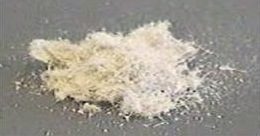
Fibres collected and packaged before treatment.
 02
02
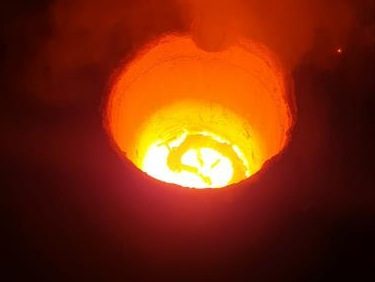
High-frequency coupling brings the material to around 1,100 °C.
 03
03
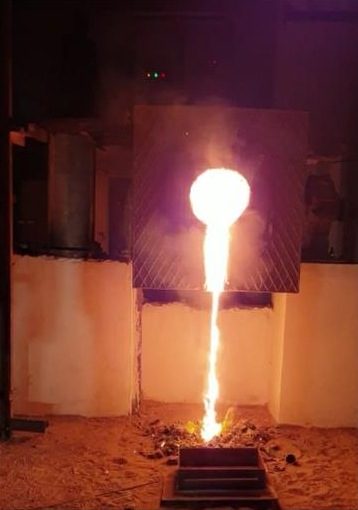
The molten material is poured, then cooled under controlled conditions.
 04
04
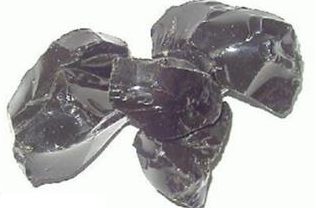
An inert, stable glass that no longer releases fibres.
Test site · Laghouat
Trials have been started locally, at our Laghouat site, and the first results are encouraging. This is the stage that prepares the move to a national treatment capacity.
Discuss it with us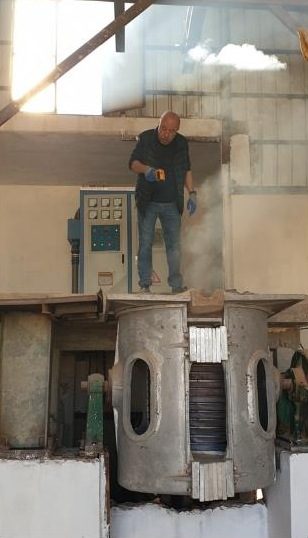
The urban mining concept was built on twenty years of applied work. These processes form the technical foundation of the technology transfers we are preparing in Algeria.
Our services
Beyond technology transfer projects, Urban Mine DZ provides the day-to-day services of waste management and environmental work. All of them correspond to the activities entered in its commercial register.
Removal organised according to the nature of the streams and the rhythm of your site.
Routing to the appropriate channels, under the conditions set by the regulations.
Restoring sites and spaces, after examining the situation and the resources required.
Regular or one-off upkeep of your premises, living quarters and outdoor spaces.
Prevention and sanitation programmes, with a research and development component.
Installation, repair and maintenance of equipment linked to solar energy and electricity.
The company
The Urban Mine company was created to carry out technology transfers and turn local waste into resources. That is exactly the aim behind the creation of Urban Mine DZ in Algeria.
A limited liability company established in Rouissat, in the wilaya of Ouargla, it began operating on 28 November 2022. It has a test site in Laghouat, where the first treatment work has been started.
We work with industrial operators holding deposits, with local authorities facing waste streams, and with companies looking for a partner able to say precisely what it can treat — and what it cannot yet.
The project is undergoing Startup certification with the competent Algerian bodies. The label has not been granted yet: we will say so here as soon as it is.
Discuss your projectOur transparency
The work, patents and publications cited on this site are those of our founder and of the Urban Mine company. No certification, no approval and no client reference is displayed until it can be produced. Ask us for the supporting documents matching your requirement.
The founder
Researcher and expert in the recycling and recovery of special waste. Author of the urban mining concept, published in 2004 and registered as an international trademark.
Our approach
Whether it is a regular collection or the study of an industrial deposit, the method stays the same: understand, qualify, organise.
You describe your site, the nature of the materials involved, the estimated volumes and your constraints. A call or a WhatsApp message is enough to get started.
We check what we can take on and under what conditions. For a deposit, this step may include characterising the material and running trials.
Scope, schedule, resources committed and terms of intervention are settled together before work begins.
Frequently asked questions
A question that is not covered here? The simplest thing is still to call us.
+213 770 07 87 87It is a stock of waste concentrated enough in useful material to be worked like an ore. A batch of spent catalysts, a stock of circuit boards or steelworks dust contain metals at grades that sometimes exceed those of natural mines.
We will tell you so. Our technical base covers metals, incineration residues, electronics and asbestos; not everything reduces to those. Where that is the case, we would rather point you elsewhere than lead you into a dead end.
Household and similar waste, inert waste, as well as special and hazardous special waste, which fall under regulated activities. Describe the material to us: we will confirm whether it is within our scope.
Our head office is in Rouissat, in the wilaya of Ouargla, and our test site is in Laghouat. For field work, tell us where your site is. For a recovery project, distance is a different matter: let’s talk it through.
The process is patented and trials have been started at our Laghouat site, with encouraging results. Moving to a national capacity is the stage under way: contact us to find out where it stands at the time of your project.
By telephone on +213 770 07 87 87, or through the form on this page, which prepares a WhatsApp message for you to read over before sending. The more precise the description — nature of the material, volumes, location — the faster our answer.
Let’s talk about your project
Write to us by e-mail from this form, or reach us directly by telephone and on WhatsApp. No sign-up.