
Technologies
Treating asbestos at 1,100 °C instead of 2,200 °C.
Asbestos treatment is the first process we are taking to national scale. It rests on research carried out in France by our founder and secured by a granted patent.
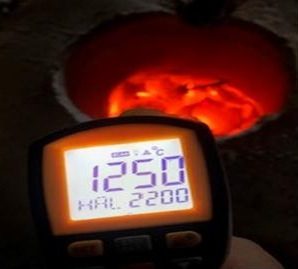
The technology relies on high-frequency coupling. It works at a markedly lower temperature than conventional vitrification: around 1,100 °C, against roughly 2,200 °C for a plasma torch. Less energy consumed, for the same result: a vitrified, inert material that can be handled safely.
Process developed and patented by F. Tedjar — patent FR 266062A1.
-
 01
01
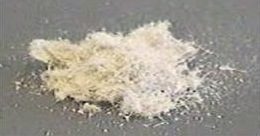
The asbestos waste
Fibres collected and packaged before treatment.
-
 02
02
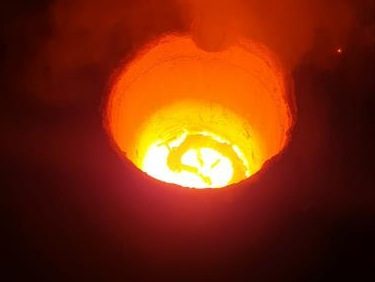
High-frequency melting
High-frequency coupling brings the material to around 1,100 °C.
-
 03
03
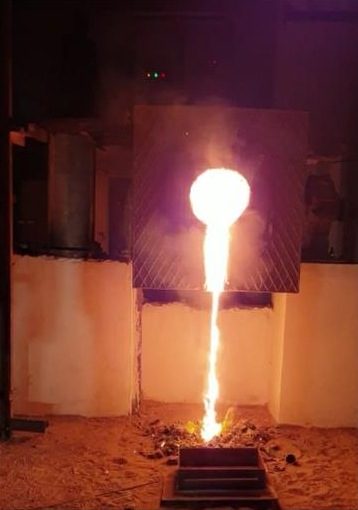
Pouring
The molten material is poured, then cooled under controlled conditions.
-
 04
04
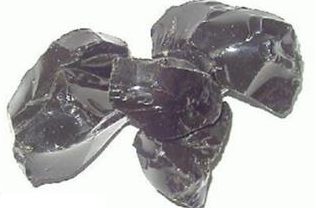
Vitrified material
An inert, stable glass that no longer releases fibres.
Test site · Laghouat
The trials have begun, in Algeria.
Trials have been started locally, at our Laghouat site, and the first results are encouraging. This is the stage that prepares the move to a national treatment capacity.
Discuss it with us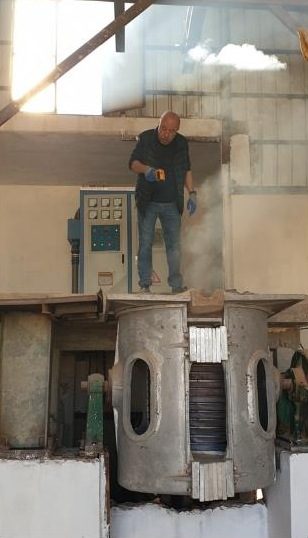
The processes developed by our founder
The urban mining concept was built on twenty years of applied work. These processes form the technical foundation of the technology transfers we are preparing in Algeria.
- Primary recycling of cells and batteriesTechnology developed at the University of Grenoble, patent FR 9845467, commercialised in France, Spain, the United States, Italy, England, Singapore and China.
- Electric arc furnace steel dustRecovery of the metal fractions contained in the dust emitted by steelworks.
- Incineration bottom ash and fly ashTreatment of the solid residues from waste incineration.
- Thermochemical conversion of asbestosVitrification by high-frequency coupling, at reduced temperature.
- Electrical waste and screensTreatment of end-of-life electrical equipment, screens included.
- Lithium batteries from electric vehiclesThe most recent work, at the heart of the strategic metals question.